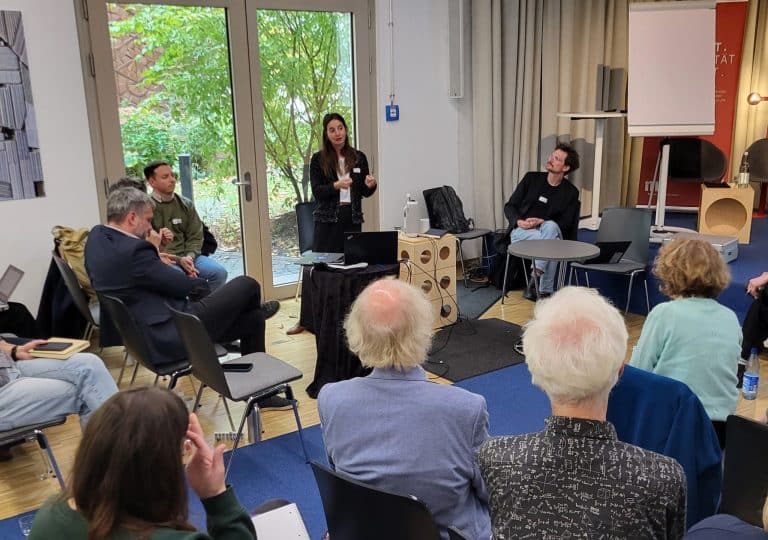
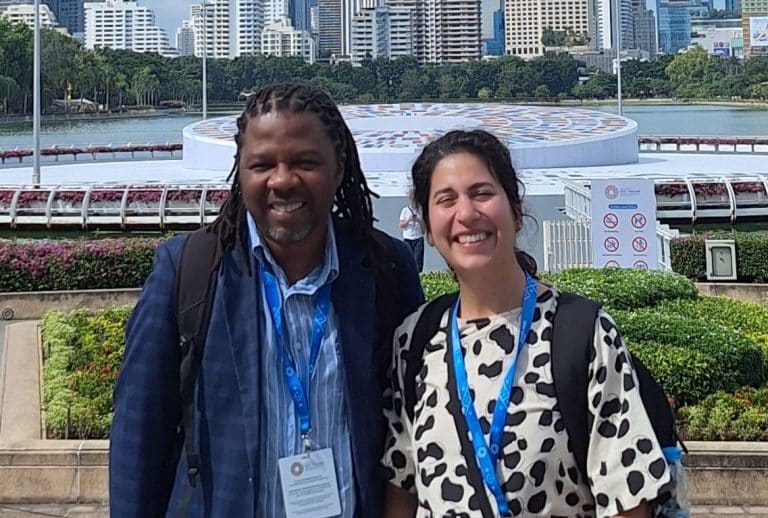
How can we move towards a pharmaceutical system that puts public health needs before private profit? This central question brought together advocates, academics, public health professionals and leaders at the second Public Pharma Conference, organized by People’s Health Movement, hosted by Medico International and supported by the Public Pharma for Europe coalition, in Frankfurt in October 2026.
Following the first conference organized by Medics for the People in Brussels in 2024, this second edition continued to build momentum around Public Pharma as an alternative and credible vision for Europe’s pharmaceutical landscape – one based on public interest, public leadership, democratic governance, accessibility, accountability and solidarity rather than profit and market-driven interests.
For decades, pharmaceutical innovation has increasingly shifted from a public health-driven approach towards a profit-driven model, despite continued reliance on public funding and investment. Today, this model is increasingly being questioned: unmet medical needs, unaffordable medicines, supply shortages, inequitable access and limited therapeutic added value highlight the need to rethink how medicines are researched, developed and made available – and to explore alternative models of pharmaceutical innovation.
Exploring alternatives to the profit-driven pharmaceutical model
Over two days, participants of the conference exchanged insights, shared concrete examples and explored practical ways to make Public Pharma a compelling and viable alternative in Europe and beyond.
Discussions addressed recent geopolitical developments and growing concerns about medicine prices, while highlighting former existing initiatives in public pharmaceutical production and research around the world.
Examples included vaccine production in the former socialist states of Eastern Europe; emerging public pharmaceutical initiatives in France, such as the launch of Pharmaceutical Commons; public production of therapies in Canada; medical research institutes in Brazil; and Product Development Partnerships (PDPs), such as the Global Antibiotic Research and Development Partnership (GARDP).
Together, these examples demonstrate that alternative approaches to pharmaceutical research, development and production are not merely theoretical. They already exist and offer valuable lessons for building a more equitable and sustainable system.
Public vaccine production, in particular, is about more than price and efficiency. It is also about strengthening resilience and autonomy, safeguarding the capacity to respond to public health needs, and ensuring that decisions about what is developed and produced remain firmly guided by the public interest.
One message from one of the participants particularly captured the vision behind Public Pharma:
“Public Pharma is more than public funding: it connects ownership, accountability, public need, autonomy and solidarity.”
Open-source innovation making medical technology more accessible
Another inspiring example came from the Open Source Imaging Initiative (OSI²), which presented its work to develop MRI machines using open-source tools.
The initiative has assembled prototypes at an estimated cost of around 20,000 euros – approximately 10% of the standard market price of an MRI machine. This illustrates the enormous potential of open-source innovation to make essential medical technologies more affordable and accessible, particularly in resource-constrained settings across the Global South.
It also highlighted how alternative models of research and development can challenge established market structures, while ensuring that medical technologies are developed in response to public health needs and made accessible at significantly lower costs.
Putting access to medicines before profit
Wemos had the opportunity to present its advocacy and campaigning work on fair medicine pricing and greater transparency in the Netherlands.
The messages behind our Monopoly game video remain as relevant as ever: access to medicines should be guided by public health needs, not by monopolies and unaffordable prices.
Greater transparency, accountability, and public oversight are essential to challenging the current pharmaceutical model and ensuring that medicines are accessible to everyone who needs them.
Building momentum for Public Pharma
The conference was an important opportunity to come together, exchange ideas and draw inspiration from the experiences, perspectives and commitment shared over the two days.
The challenge ahead is to strengthen collaboration, build on existing initiatives and advance a shared vision of Public Pharma. Equally important is developing a compelling narrative that engages citizens, civil society organizations and policymakers, and builds broader support for this alternative vision.
A pharmaceutical system that puts people before profit is possible. By working together, we can turn this shared vision into reality.