How the GFF can protect and expand financing
We are witnessing a decline of official development assistance (ODA) all around the world. Against this challenging backdrop, the GFF launched its 2026–2030 investment round at a high-level resource mobilization event, just ahead of our session. Donors announced over USD 800 million in commitments. This included pledges from Canada, Germany, the Netherlands, Norway, the Children’s Investment Fund Foundation (CIFF), the Gates Foundation and the Laerdal Scale-Up Fund. These commitments represent more than 80% of the GFF’s USD 1 billion fundraising goal for 2026 and mark a strong start towards the goal of raising USD 2.2 billion by 2030.
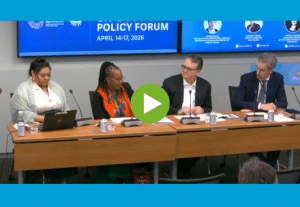
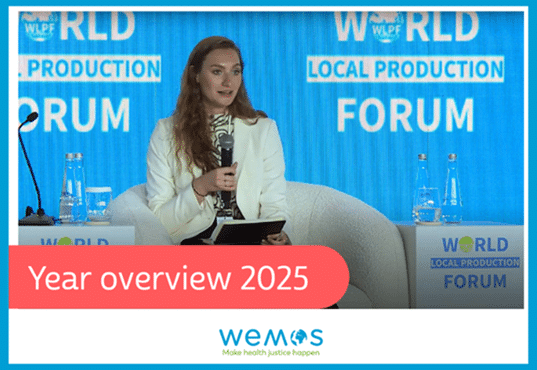
Our panel discussion, moderated by Xochitl Sanchez from ACTION Global Health Advocacy Partnership, brought together governments, civil society and youth, and the GFF Secretariat. Together they explored how the GFF can help protect and expand financing for women’s, children’s and adolescents’ health and nutrition in a difficult global context of shrinking ODA, increasing fiscal constraints and growing pressure on domestic health budgets.
From consultation to ownership
Tjedu Moyo from Lunia Centre for Youths, Zimbabwe strongly set the direction of the discussion stating that financing decisions must be grounded in people’s and communities’ lived realities. In her video intervention, Tjedu highlighted that “the African woman is not a statistic”, She underlined the need to move from consultation to ownership, and to ensure that financing frameworks respond to the needs of the most affected communities; not only as a technicality but as a moral imperative.
The GFF as a multiplier of financing, impact and alignment
The speakers emphasized the GFF’s catalytic role in health financing. Luc Laviolette, Head of the GFF Secretariat, explained how GFF grants can help incentivize governments to allocate resources from the World Bank International Development Association (IDA) to women’s, children’s and adolescents’ health and nutrition. Jerome Larosch, the Head of Division of International Financial Institutions at the Dutch Ministry of Foreign Affairs strengthened this point, describing the GFF as a multiplier of financing, impact and alignment. He also stressed that country ownership must mean more than government ownership. According to him, communities, civil society, youth, parliamentarians and affected groups must have a meaningful role in shaping priorities and monitoring results; a point very much welcomed by all panellists.
Need for inclusion and accountability
The discussion also addressed accountability and inclusion. Rosemary Mburu from WACI Health noted that while multi-stakeholder platforms exist in many GFF countries, their effectiveness varies. Civil society participation depends on practical conditions such as timely meeting notices, access to agendas and documents, and genuine opportunities to influence decisions. She highlighted the GFF We Want platform as an important space for African civil society and affected communities to organize, share lessons, track investments and strengthen accountability.
Practical hurdles
The Q&A part of the session reflected many of the issues that civil society partners face in practice. For example, how to strengthen private sector engagement without losing equity objectives, how the new Sustainable Commodity Access Program will work alongside other commodity financing mechanisms, and how young people in rural communities can access health services while countries wait for additional financing to materialize. These exchanges helped ground the discussion in practical questions of implementation, instead of focussing merely on resource mobilization.
Long-term investment in healthy societies
The session concluded with a clear call to sustain political and financial momentum behind the GFF, while ensuring that resources translate into equitable results. As speakers underlined, investing in women, children and adolescents is not only about saving lives today, it is also about protecting young people’s potential, strengthening health systems and advancing fairer, more resilient societies.
We co-organized this session with the GFF Secretariat and other members of the GFF civil society and youth constituency