End-term evaluation shows high impact of the Make Way programme
19/3/2026
- News
The Make Way programme, aimed at breaking down barriers to sexual and reproductive health and rights (SRHR) for marginalized groups in societies, ended in December 2025. The end-term evaluation of the programme shows that Make Way successfully influenced national, regional, and global policies, strengthened the advocacy capacity of civil society organizations and young people, while meaningfully engaging youth and applying an intersectional lens to realize better health outcomes for the most marginalized people. Below we share the main findings, learnings and recommendations.
Make Way’s relevance
Make Way’s Theory of Change (describing the positive change a programme aims to achieve and the underlying assumptions) was highly relevant to all contexts. It was strategically adapted to address evolving operational challenges and contextual shifts, including economic pressures, shrinking civic space, and resistance to SRHR, alongside cultural norms, infrastructure gaps, and policy opportunities. Youth with compounded vulnerabilities were positioned at the centre of advocacy.
The evaluators also found that Make Way responded directly to gaps, where youth with compounding vulnerabilities are routinely excluded from health systems and policy dialogues. The programme prioritized common challenges and priorities of local health systems and broader SRHR-related services that resonated with policy priorities and frameworks. And it outlined how programme outcomes and impact would be achieved through specific pathways through an intersectional lens.
The programme’s effectiveness
The evaluators concluded that most targets in the programme were met or exceeded. Some of their findings:
Make Way successfully influenced multiple national, regional, and global policies. Notable gains were achieved in Ethiopia, Rwanda, and Zambia where concrete policy changes were adopted, while Kenya and Uganda faced political and institutional constraints that limited national-level influence.
Make Way significantly strengthened the advocacy capacity of civil society organizations and young people through structured training, coalition-building, and the uptake of intersectional tools.
Youth participation was meaningfully enhanced through youth panels, and regional platforms improved the availability, accessibility, acceptability, and quality (AAAQ) of sexual and reproductive health services, particularly through youth-friendly services, reduction of stigma, and disability-inclusive practices.
Meaningful youth engagement and gender
According to the evaluators, Make Way was highly effective in advancing meaningful youth engagement and intersectionality across contexts. They noted that:
Youth engagement was widely integrated into advocacy strategies, with the strongest performance at the regional and Ethiopian levels, where youth leadership, co-implementation, and autonomy in SRHR decision-making were most evident.
There were significant shifts from dependency to self-determination, particularly among marginalized youth with disabilities.
Youth councils, safe spaces, and participation in high-level forums strengthened the voice of youth in governance and service delivery.
Intersectionality, with gender as a core dimension, was systematically embedded in programming, policy advocacy, and data generation.
Overall, Make Way effectively institutionalized youth participation and intersectional practice, though sustainability and equitable reach remain key challenges.
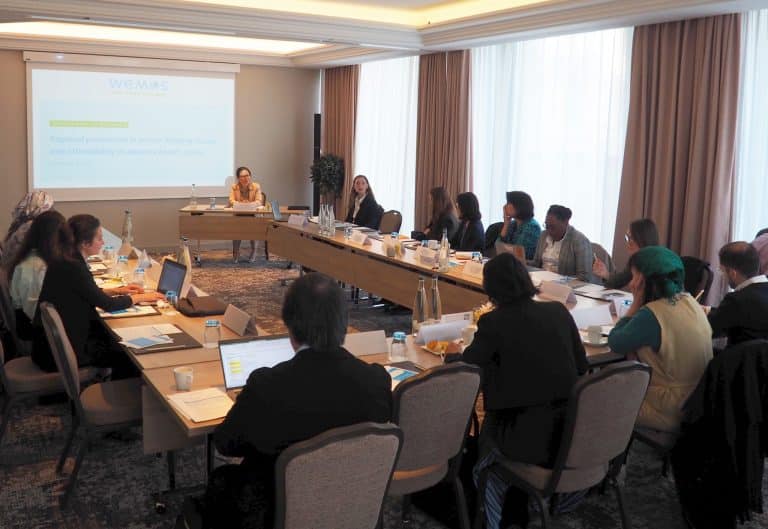
Youth panel members and collaborating partners at a budget advocacy training in Kenya in 2022.
Sustainability
The evaluation concludes that there are promising signs of continuity. Youth leadership and the structures created to elevate young voices, for example, represent promising signs of sustainability. Moreover, by situating SRHR within broader agendas, such as Universal Health Coverage (UHC), health financing, and economic justice, Make Way Regional and Global broadened its constituency and created alliances. And the framing of SRHR within cross-sectoral debates contributed to embedding intersectionality, building coalitions and strengthening youth leadership. Still, fragilities, like turnover in staffing at ministries and politicians in parliament, may undermine progress.
Coherence and partnership
In terms of external coherence, evaluators found that the programme effectively aligned its work with SRHR stakeholder priorities. As for internal coherence, respondents praised the Make Way partnership as a unique and mutual partnership that strengthened institutions, enhanced collaboration, and safeguarded the interests of target groups.
Many respondents described Make Way as a journey of success that built capacity and left best results across implementing sites. Stakeholders particularly highlighted Make Way’s commitment to inclusivity, noting that the programme stood out for its intentional inclusion of marginalized voices, particularly youth with compounded vulnerabilities.
Lessons learned
The end-term evaluation highlights several important lessons for future programming. These include:
Intersectionality emerged as a powerful advocacy lens that not only reframed SRHR dialogues but also provided civil society organizations and duty bearers with practical tools to analyse and respond to compounded vulnerabilities.
The establishment of a regional youth council of young people with disabilities (by Liliane Fonds) and cross-movement coalitions demonstrated that legitimacy and influence are significantly strengthened when marginalized youth are organized in structured, inclusive spaces.
The programme’s willingness to adapt its Theory of Change to shifting political contexts proved crucial in maintaining relevance and momentum, particularly when primary policy goals faced resistance.
Linking SRHR to broader agendas such as health financing, disability justice, and education created new entry points for advocacy and helped reduce political resistance.
While youth were meaningfully engaged in policy processes and global forums, persistent barriers such as stigma, economic precarity, and accessibility challenges continue to restrict equitable participation, underscoring the need for deeper systemic reforms alongside advocacy gains.
Recommendations
The end-term evaluation draws the following recommendations for future partnerships:
Align advocacy priorities with key frameworks – such as SRHR priorities of the African Union, or global health financing reforms – for real-time tracking of outcomes and identify advocacy entry points earlier.
Address gaps in intersectional data in policies and Health Management Information Systems by funding knowledge hubs that generate and disseminate data on SRHR access and outcomes.
Address economic vulnerabilities that intersect with SRHR exclusion by integrating livelihood and social protection in SRHR programmes.
Youth should be engaged from the earliest stages of policy design.
Engage actors beyond the SRHR sector, particularly in health financing and education policy.
To avoid uneven distribution and or lack of financial resources for consistent youth participation, capacity-building should be systematic, and youth platforms institutionalized and resourced.
To enhance sustainability, the Ministries of Health and local government health departments should integrate tools such as the intersectional community scorecard and the intersectional See-Judge-Act tool into official SRHR accountability mechanisms.
Future partnerships should consider establishing pooled regional advocacy funds accessible to youth networks and CSOs; this would not only provide predictable resources but also incentivize collaboration over competition.
To strengthen transparency, representation and information flows, there is need for stronger Southern leadership, clearer feedback loops, and more meaningful inclusion of youth voices in decision-making spaces in future programmes.
We are very proud of the positive evaluation of the programme. The Ministry of Foreign Affairs, the funder of this five-year programme, has approved the end-term evaluation and complimented the good quality of the report.
We thank our programme partners Akina Mama wa Afrika, The Circle of Concerned African Women Theologians Kenya, Forum for African Women Educationalists (FAWE), Liliane Fonds, and VSO Netherlands, as well as the many collaborating partners and of course the youth who were key contributors to the success of the programme.
Also see our online booklet with lessons that we learned in the five years of implementation of the Make Way programme.
A strong, diverse partnership
Make Way consisted of six core partners who strengthened each other with their specific areas of expertise:
Akina Mama wa Africa, The Circle of Concerned African Women Theologians, Kenya (The Circle), Forum for African Women Educationalists (FAWE), Liliane Foundation, Voluntary Service Overseas Netherlands (VSO), and Wemos, as lead organization.
The programme was a partnership with the Dutch Ministry of Foreign Affairs.
Together, we implemented Make Way in Ethiopia, Kenya, Rwanda, Uganda, Zambia, the (Eastern and Southern) African region and at a global level. We worked with 45 collaborating partners across multiple countries to break down barriers to SRHR.