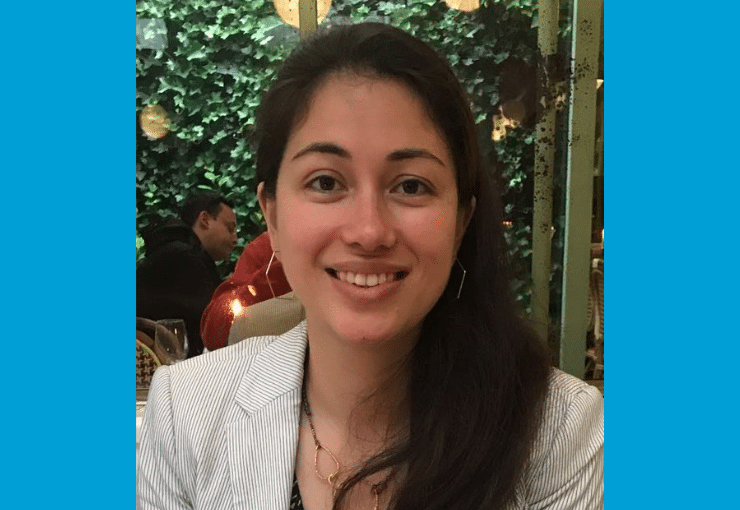
We are happy to share that on 15 April 2026, Suying Lai will start as new director of Wemos. With almost 19 years of experience working at Oxfam Novib, Suying is an experienced leader in the humanitarian and development sectors. She has lived in Dar es Salaam for two years, and in Geneva, where she worked for the Geneva Centre for the Democratic Control of Armed Forces, and was an intern at the Permanent Delegation of the European Commission to the United Nations.
We asked her a few questions to learn more about her.
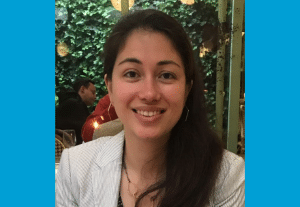
Can you tell us a bit more about yourself?
“Sure, my name is Suying Lai. I am 44 years old, married and a mother of two teenagers (aged 12 and 14). I have a Chinese father and Dutch mother. I was born in the Netherlands but grew up in Taiwan where my father taught fine arts. With family spread across the world, including in the Netherlands, Taiwan, Hong Kong and Japan, I very much feel like a citizen of the world.
After becoming interested in politics and history at a young age, I studied political science with a focus on international relations at the Vrije Universiteit Amsterdam. Throughout my career, I have worked on humanitarian and conflict issues, as well as on disarmament and security affairs mostly at Dutch NGO Oxfam Novib where I worked for almost 19 years. As part of my work, I have travelled to many severely conflict-affected countries such as DRC, Somalia and Yemen, and witnessed firsthand what it means to live without access to clear water, basic medicines or a properly equipped maternity ward.
What drives me in my work is the fight against injustice. It is unconscionable that in a world where we have sufficient resources to provide a dignified life for all, millions of people needlessly suffer.”
What attracted you to Wemos?
“I really appreciate Wemos’ focus on systems change and health justice. To uphold health as a human right, we need to address the unequal power relations and dynamics at play that prevent access to healthcare and medicines. Health and healthcare cannot only be approached as a technical or medical issue.
Moreover, I care strongly about Wemos’ focus areas: access to medicines, and sexual and reproductive health rights, and of course, as an underlying condition, adequate and quality financing for health to make the above possible. I feel a strong sense of value alignment with my new Wemos colleagues. This is very important to me.
Finally, after working at Oxfam Novib for many years, an organization with more than 300 staff and lots of thematics, it is refreshing and exciting to work in a much smaller organization with a specific focus on global health.”
What experience do you bring to this role?
“I am fortunate to have worked in both programme management, as well as policy influencing and campaigning. My experience in the humanitarian sector has made me agile and flexible, which is important in this time of change in the world and the sector. I also have ample experience with strategy development and change management. This is relevant since Wemos’ current strategic plan is ending next year.”
You have a lot of experience in humanitarian aid, migration and conflict & fragility. What is your interest in global health?
“For me, global health is strongly connected to the humanitarian imperative, that is, the moral obligation to save lives and alleviate suffering based on needs alone, without discrimination. It is about creating and upholding a system that ensures everyone can be healthy and receive healthcare when needed – irrespective of where you live, who you are or what income you have.-. We have incredible knowledge and technology at our disposal, yet not everyone benefits (in fact, some people are actively excluded). We have a moral obligation to fight for a better, more just system and prevent the further rollback of rights that we’re seeing across the world.”
Why do you think doing advocacy is an effective way to improve global health?
“Health is a human right, not a privilege. To ensure everyone has access to good healthcare, the global system needs to change. This cannot only be achieved through implementation of programmes since these can only benefit small numbers of people. For systematic change, we need improved policies and effective implementation. For example, to ensure adequate funding for primary healthcare or neglected diseases, or to ensure that marginalized groups don’t get turned away from the hospital when they seek help. To change policies, policy influencing (and sometimes campaigning) is needed.”
What do you consider to be the biggest challenge for Wemos?
“The biggest challenge that Wemos and the rest of the global health community are facing is the ‘epidemic’ of apathy towards our fellow human beings. The dismantling of the US Agency for International Development (USAID) by the Trump administration coupled with cuts to foreign assistance by various high-income countries including the Netherlands, illustrates this. According to The Lancet, these budget cuts could lead to 9.4 million additional deaths by 2030, including 2.5 million deaths for children under five. These budget cuts are also jeopardizing the critical work of civil society organizations across the world, organizations that play a critical watchdog role towards governments and international organizations. It will be critical to successfully navigate this new funding and geopolitical landscape.”
What opportunities do you see for Wemos to make a positive impact on global health justice?
“Wemos has unique expertise in financing for health and access to medicines. This makes our organization a trusted partner and source of knowledge for fellow NGOs, governments and multilateral organizations. The Covid-19 pandemic, among others, has served as a catalyst for lower-income countries to prioritize independence in vaccine and medicine production. This aligns closely with Wemos’ vision on system change to realize health justice. Regional production of medicines, socially responsible licensing of medical innovations and making the global financial architecture fairer with a tax convention and debt relief, all contribute to long-term solutions for a fairer system with better balanced power relations.”
What do you think your first days on the job will look like?
“I want to meet my colleagues, to get to know the person behind the job and for them to get to know me. And I will listen carefully. To understand the full breadth of what Wemos has to offer, as well as the challenges and opportunities that colleagues, and partners and allies across the world see. I also want to meet with our generous donors who make our work possible, to establish a good working relationship with them.”
What are you most excited about?
“Without a doubt this is contributing to Wemos’ mission: the fight for global health justice.”