Environmental challenges of digital technology and how to reduce them

9/12/2025 - News

Climate change affects our health, everywhere in the world. This is why at Wemos, we want to keep our carbon footprint as small as possible. That’s why we commute by public transport, only travel by plane if really necessary, and avoid printing.

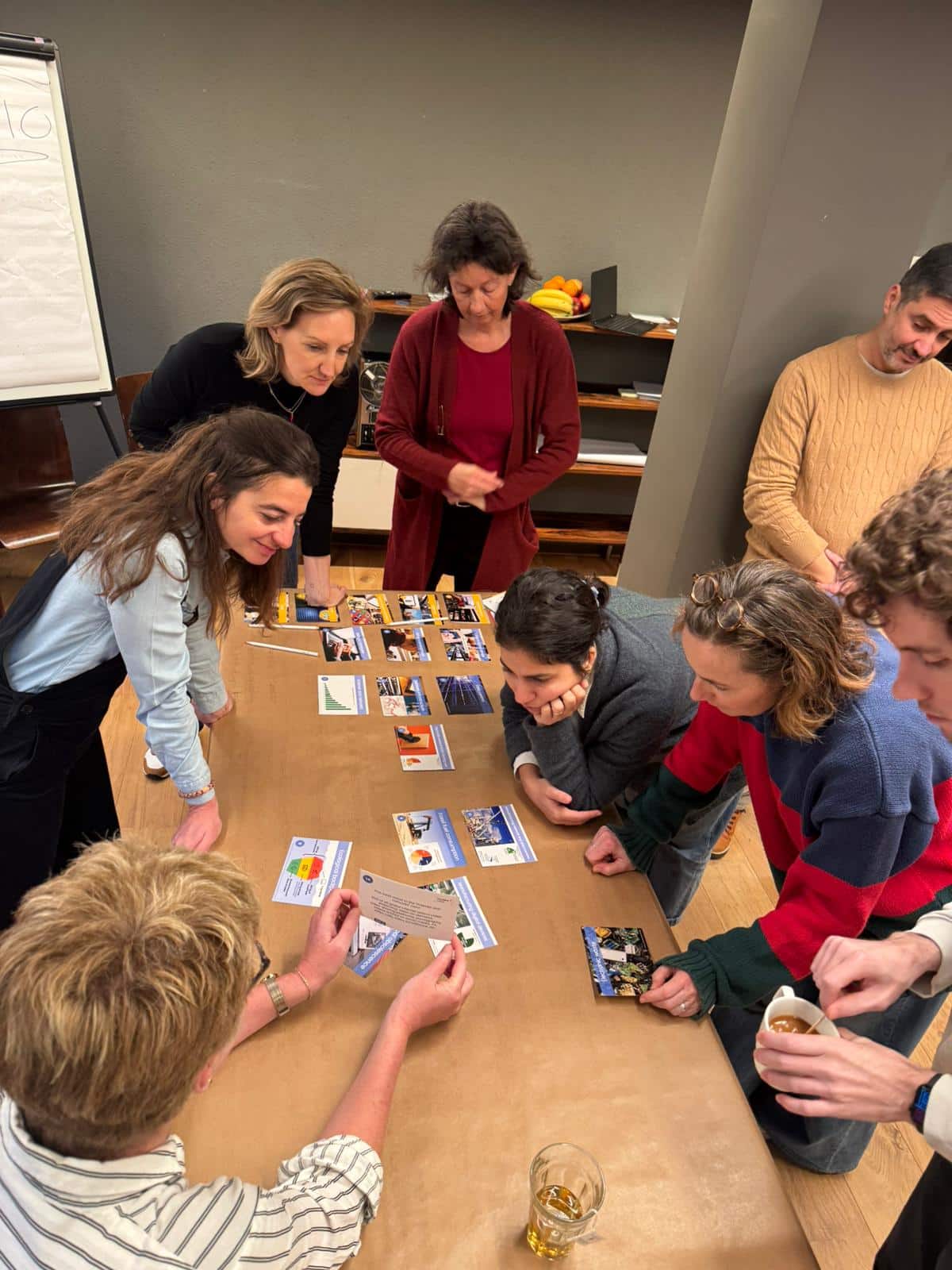
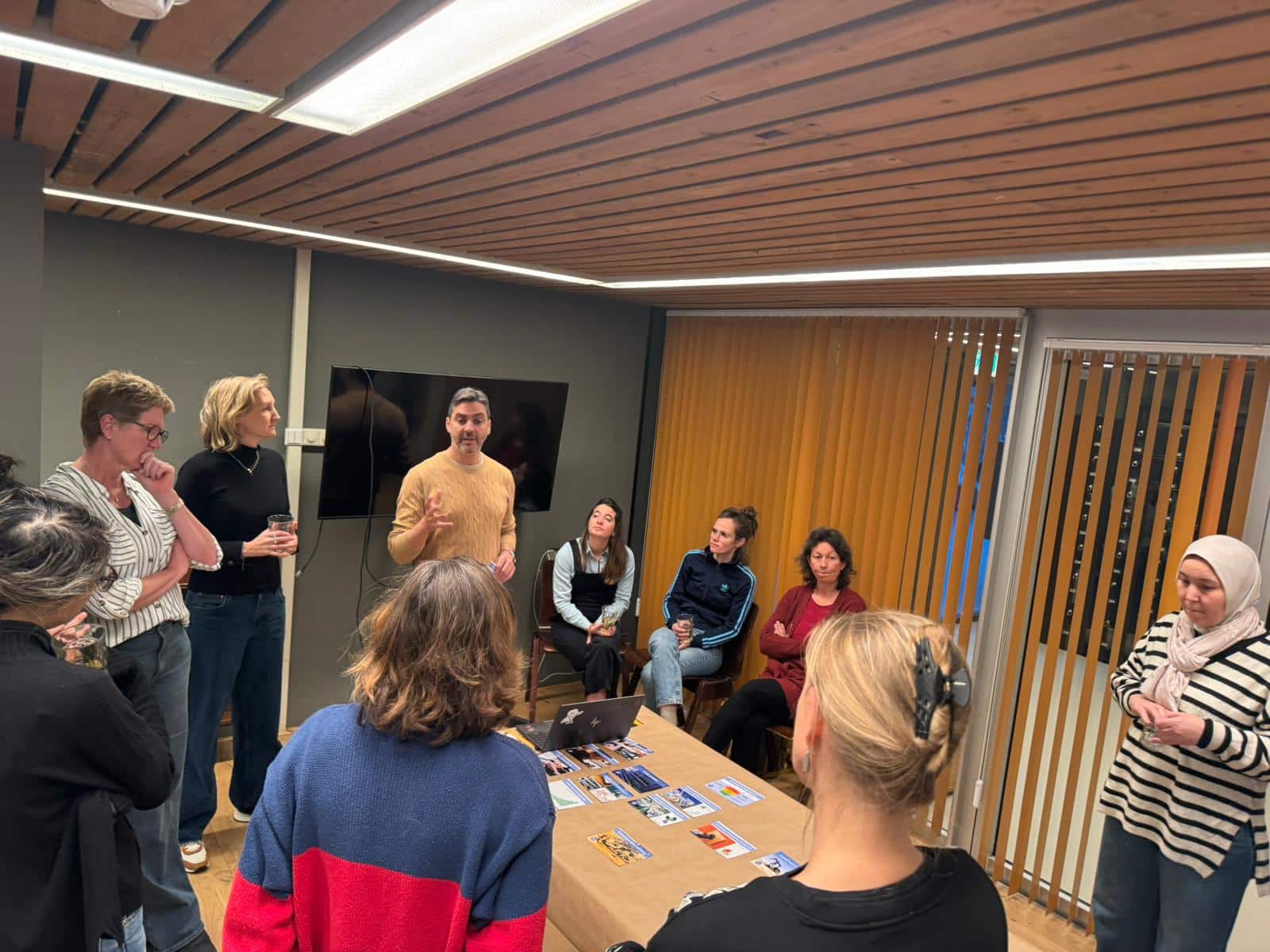
Still, most of the work we do involves digital technology, which also poses environmental challenges. To better understand those challenges and how to overcome them, as a team, we attended a Digital Collage workshop.

The facilitator, Sérgio Magro Jacinto from Sustainability Literacy, challenged us to organize cards with information about digital technology – from the needs people have, required resources, production, planned obsolescence, the impact on humans and nature, and much more. This sparked open discussions and gave us new insights. Such as these:

Although a lot of attention often goes out to data centres as giants in electricity consumption, the largest impact on climate is caused by the production of the devices we use. For example, it takes 800 kg of resources and thousands of litres of water to produce a laptop of 2 kg. That is why it is so important to use a device for as long as you can. To repair it when it needs fixing, and to look for refurbished products when you really have to purchase a new device.

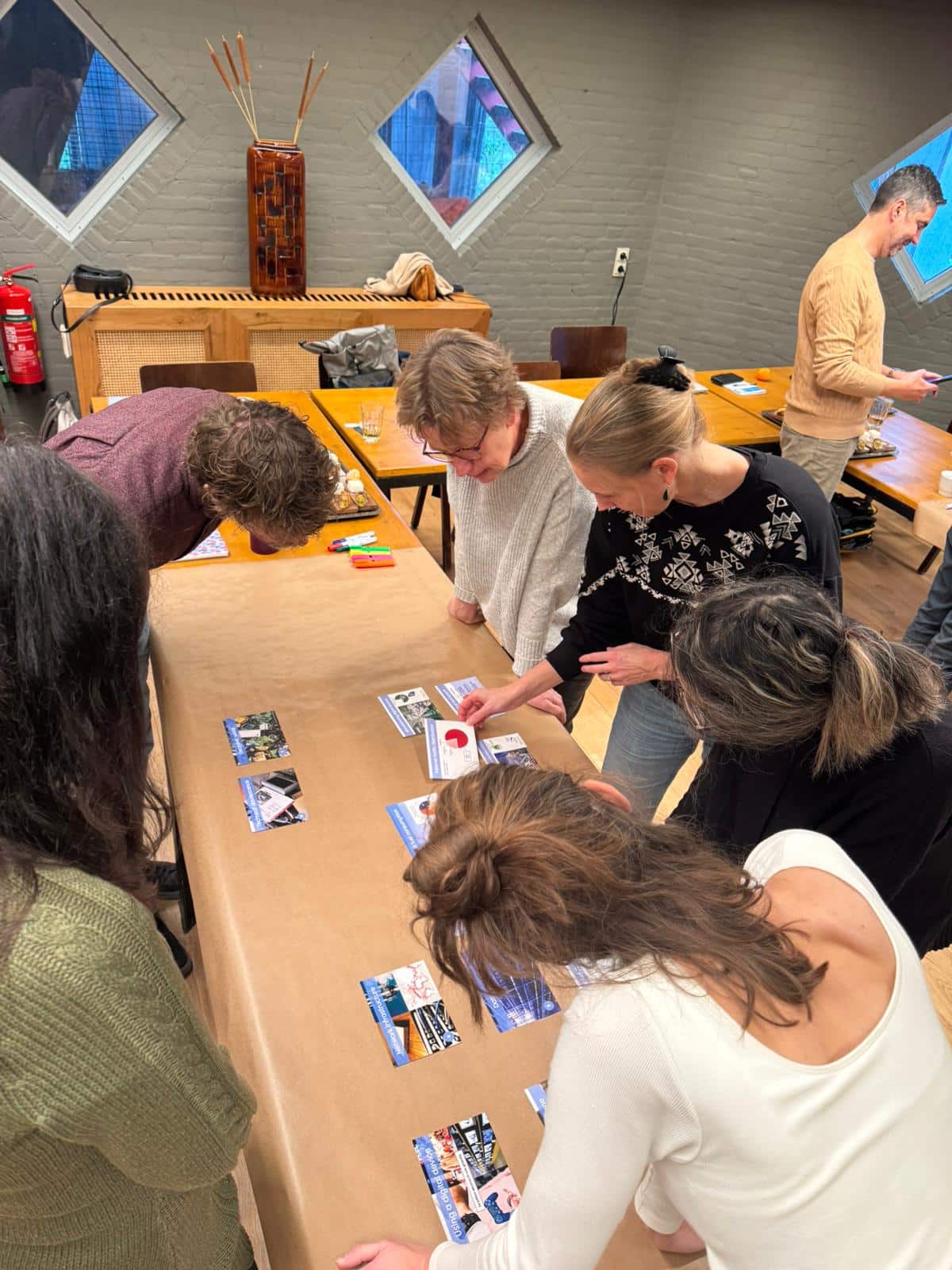
We explored practical solutions and potential behavioural changes, working toward concrete and feasible actions that both individual participants and Wemos as an organization can adopt. We considered easy-to-implement actions as well as more ambitious ones, and we discussed the potential impact of each.

At the end of the workshop, we committed to:

  • Raising awareness about the environmental impact of digital technology beyond the Wemos team – for example, by sharing information through our communication channels and by continuing to participate in climate marches.
  • Un-digitising where possible, such as using only one laptop during meetings (which also improves focus), limiting the use of Artificial Intelligence to tasks where it genuinely adds value, reducing the use of videos, and switching to the Ecosia browser.
  • Rationalizing our digital use, by deleting unnecessary files, removing emails after a certain period, and developing guidance for a well-organized and sustainable e-storage system.
  • Reviewing and revising our purchasing policy, including buying second-hand or refurbished digital devices and establishing clear guidance on recycling electronic equipment.

We thank Unitaid for supporting and accelerating our climate and environmental efforts.

Receive our newsletter

This field is for validation purposes and should be left unchanged.
  • instagram
  • linkedin
  • youtube
  • bluesky